Why Organic Traffic Converts Differently Than Paid Traffic
Organic and paid clicks look identical in your analytics dashboard but behave nothing alike. This explains the intent gap behind the conversion rate difference and how to stop comparing apples to ad spend.
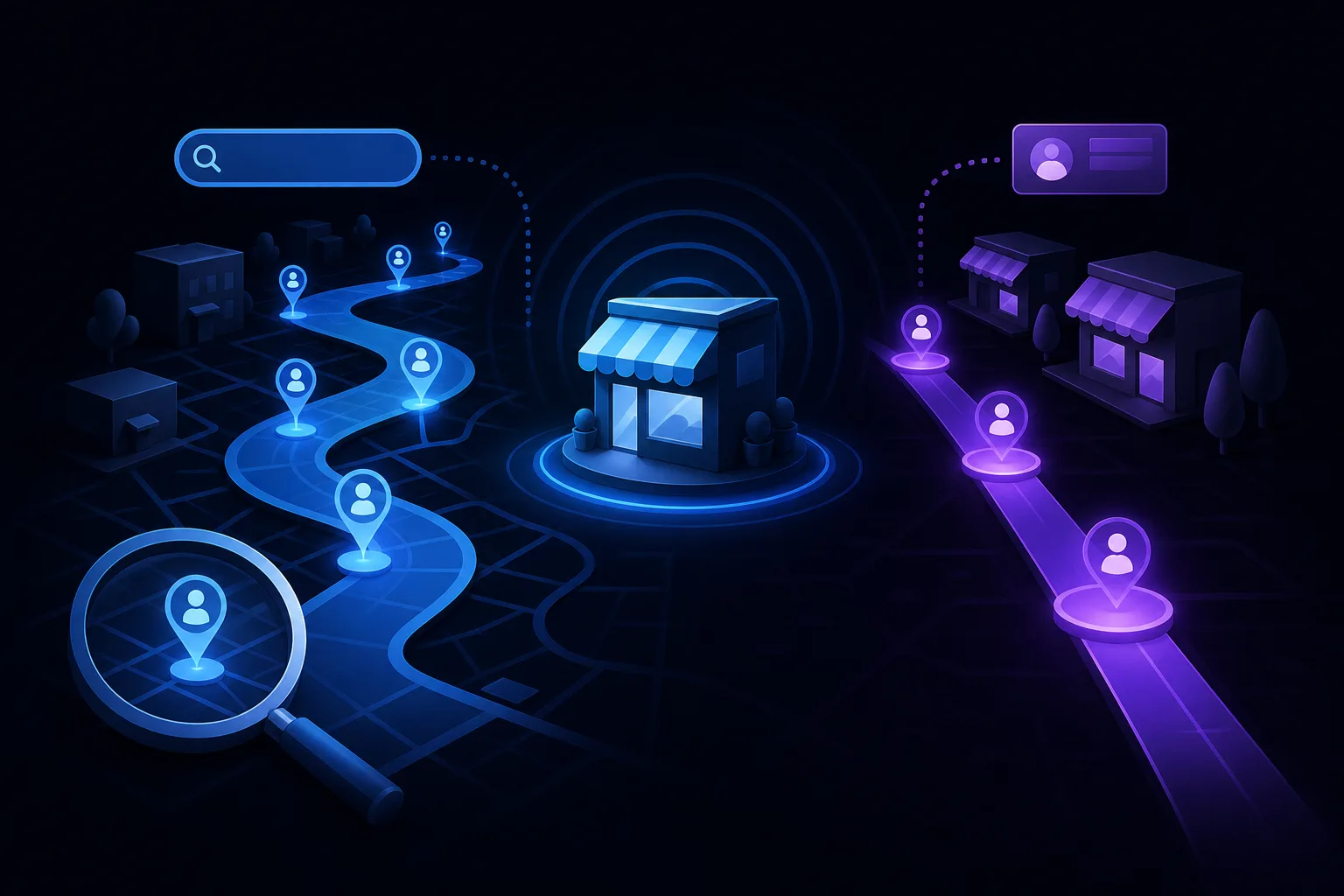
TL;DR: Organic traffic tends to convert better because it usually shows up after someone has already decided they have a problem and started comparing solutions. Paid traffic often interrupts people earlier in that process, so it needs more convincing per click. Neither is "better," they just do different jobs, and comparing their conversion rates head-to-head without accounting for intent is how owners talk themselves into cutting the wrong budget.
What happened
A plumber, a law office, an appliance repair shop, doesn't matter who, eventually pulls up Google Analytics and notices something odd: the organic traffic converts at, say, 6%, and the Google Ads traffic converts at 2%. Same website. Same phone number. Same offer. So the instinct is to kill the ad budget and "just focus on SEO."
That instinct is understandable and often wrong, or at least wrong for the reason people assume.
Here's the mechanism. Organic search results, especially the ones ranking for specific queries like "emergency plumber west palm beach" or "probate attorney near me," tend to catch people deep in the decision process. They've already searched two or three times, maybe compared a competitor, and now they're searching for you by name or by a very specific problem phrase. That's a warm click.
Paid ads, on the other hand, often get placed in front of broader, top-of-funnel searches, or they show up alongside organic results for the same query and simply intercept some of that traffic before it reaches you organically. Some paid clicks are just as warm as organic ones. Others are cold; someone typing "AC repair" for the first time with zero brand preference, clicking whichever ad looks legit.
Mix warm and cold clicks together under one channel and the average conversion rate tells you almost nothing about quality.
Why it matters
If you're making budget decisions based on raw conversion rate comparisons between channels, you're comparing two different customer journeys as if they were the same one. That leads to bad calls in both directions:
- Cutting paid ads because organic "converts better," when paid was actually generating brand awareness that fed organic searches later.
- Overfunding paid ads because a campaign shows a decent conversion rate, when it's just harvesting demand your organic content already created.
Think of it like a repair shop that runs a radio ad and a Google Ads campaign at the same time. Someone hears the ad, doesn't call, but Googles the shop's name a week later and finds it organically. That conversion gets credited to organic search in most analytics setups, but the ad did real work. Attribution models struggle with this exact scenario, and it's a documented limitation, not a fringe case. The Google Analytics attribution documentation is upfront that last-click and data-driven models will assign credit differently, and neither is a perfect record of cause and effect.
The conversion rate gap between organic and paid isn't a scoreboard. It's a symptom of where each channel sits in the buying journey, and sometimes a symptom of tracking gaps, not channel quality.
One-line takeaway: Different conversion rates usually mean different buyer intent, not different channel quality.
Tired of reports nobody reads? See how we report
What we don't know yet
A few things vary enough by business that a blanket rule doesn't hold:
- How much cross-channel influence exists. Without proper multi-touch attribution or at minimum consistent UTM tagging, you can't know how many "organic" conversions were actually seeded by an ad impression, a Facebook post, or a truck wrap someone saw in traffic.
- Whether your paid campaigns are targeting the right intent level. A campaign bidding on broad, generic terms will always convert worse than one bidding on tightly matched, high-intent phrases. That's a targeting problem, not proof paid traffic is inferior.
- Landing page fit. If paid traffic lands on a generic homepage while organic traffic lands on a specific, well-matched service page, the conversion gap might be a page problem, not a channel problem. This is the same dynamic covered in why service pages rank but the homepage doesn't, and it applies just as much to paid landing pages as it does to organic rankings.
- Sample size and seasonality. A slow month, a broken form, or a single bad review can swing conversion rate numbers for either channel without any change in traffic quality.
We'd want to see your actual attribution setup and at least a full quarter of data before drawing conclusions specific to your business. Averages from other industries won't map cleanly onto yours.
What to do about it
Here's a diagnostic sequence to actually figure out what your numbers mean, instead of guessing:
- Segment conversion rate by landing page, not just by channel. If organic and paid traffic hit different pages, you're not comparing channels, you're comparing pages.
- Check search term reports on your paid campaigns. If you're bidding on broad match terms with low commercial intent, that's inflating your paid traffic count with cold clicks. Tighten match types before you blame the channel.
- Look for branded search spikes after ad campaigns launch or pause. If organic branded traffic drops when you pause ads, the ads were doing more work than the conversion rate implied.
- Set up UTM parameters and consistent tagging so at least first-touch and last-touch data are both visible, not just default channel groupings.
- Compare cost per lead across channels, not just conversion rate. A 2% conversion rate on cheap, high-volume traffic can beat a 6% conversion rate on traffic that costs five times as much per click.
If your analytics setup can't answer these questions cleanly, that's usually a tracking or attribution problem worth fixing before you touch the ad budget. If you're not sure whether your current setup can even segment this way, a free AI readiness audit will show you what your data can and can't currently tell you. For businesses juggling both channels without a clear system, local SEO and generative engine visibility work and Google Ads management working from the same landing pages and tracking setup tends to close this gap faster than optimizing either channel in isolation. You can also see how this plays out for real businesses in the case studies.
One-line takeaway: Fix your attribution and landing pages before you fix your budget allocation.
Tired of reports nobody reads?
SmartAleck sends clients a monthly report a human actually understands: what moved, why, and what we're doing next.
Frequently asked questions
Should I stop running paid ads if my organic traffic converts better?
Not based on conversion rate alone. Check whether your ads are seeding organic searches later, whether cost per lead is actually higher on paid, and whether both channels are sending traffic to comparable landing pages before making that call.
Why does the same keyword convert differently in ads versus organic search?
Ad placements often catch broader match variations and colder searchers, especially with loose match type settings, while a specific organic ranking usually reflects a more precise, higher-intent search. Tightening your ad targeting can close much of that gap.
Does a lower paid conversion rate mean my ads are wasting money?
Not necessarily. Look at cost per lead and downstream value, not just conversion percentage. Cheap traffic at a lower conversion rate can still produce more total leads for less money than expensive, highly-qualified organic traffic.
How long should I track data before comparing channel performance?
A full quarter at minimum, and longer if your business has seasonal demand swings. Shorter windows are too easily skewed by a single slow week, a tracking gap, or a temporary site issue.
You May Also Like
View All Posts
Organic Traffic vs Map Pack Traffic: What Converts Better for Local Businesses
Map Pack listings and organic results both show up on Google, but they pull different buyers at different moments. One is faster to act, the other builds long-term trust. Here's how to tell which is working for your local business and where to put your energy.
Google Ads Getting Clicks But No Calls or Leads? Here's Why
Clicks mean someone showed up. No calls means they left without doing anything. That gap between click and conversion is where ad budgets go to die, and the fix is almost never 'spend more money.' Here's what's actually happening.
Google AI Overviews: How to Keep Earning Clicks in 2026
Google AI Overviews can answer questions and link to sources. Learn how to measure their effect on your own search traffic and keep publishing useful local and service content.
Tracking Local SEO Progress: 8 Metrics That Actually Signal Growth
Rankings screenshots feel like progress but rarely predict revenue. This listicle breaks down 8 local SEO metrics worth tracking, what each one actually tells you, and how to read them without lying to yourself.