Why Your Service Pages Rank But Your Homepage Doesn't
Your service pages climb Google's results while your homepage sits in the dark. This is usually a focus problem, not a technical one. Here's why Google treats your homepage differently and what you can do to fix it without blowing up your site.
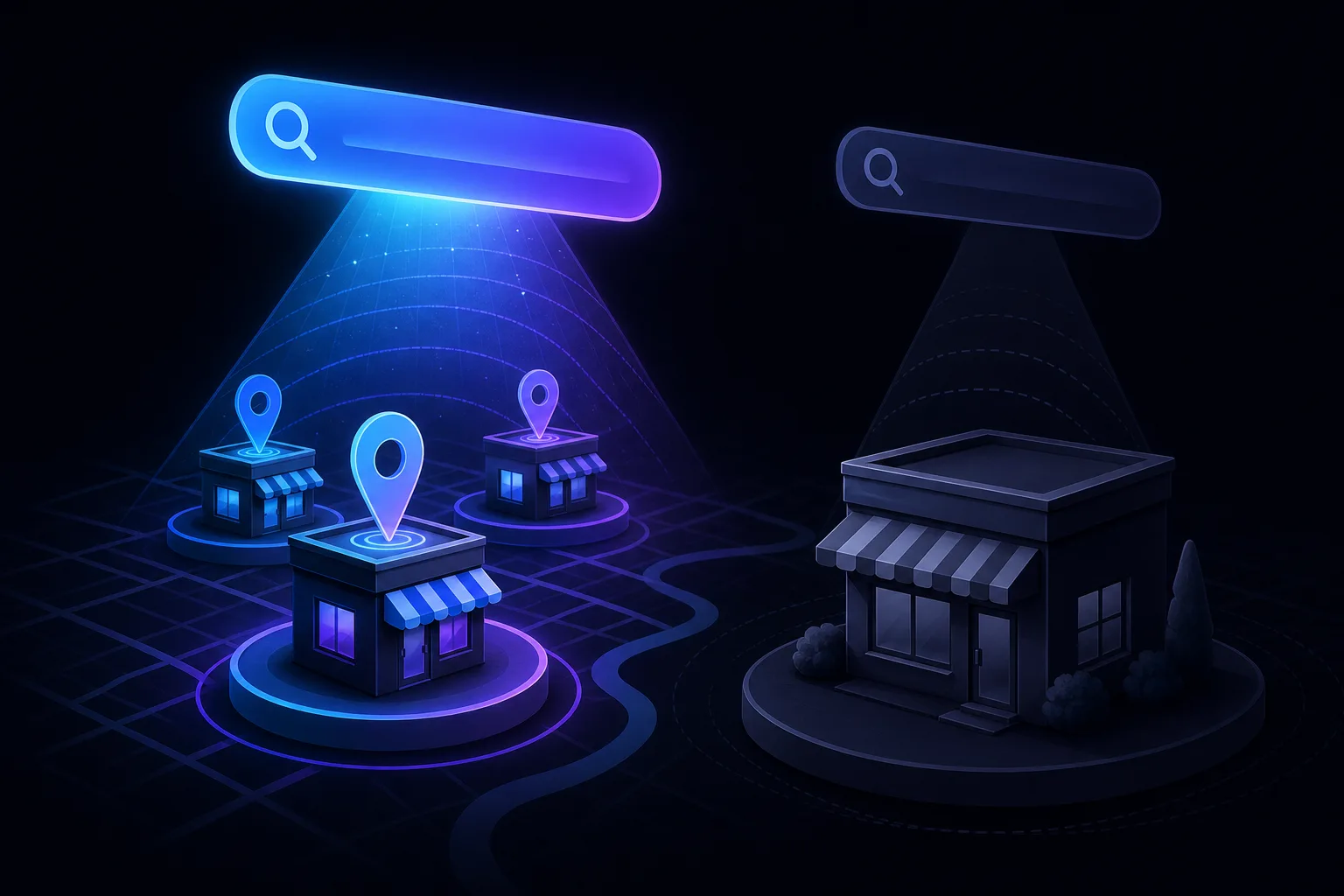
TL;DR: Homepages almost never rank for specific service queries because they're designed to introduce everything, not answer one question well. Google ranks the page that best matches a specific search. Your service pages win because they're focused. Your homepage loses because it isn't.
What Happened
You search for your own business. Your "HVAC repair West Palm Beach" page shows up. Your "water heater installation" page shows up. Your homepage? Page two. Maybe page three. Maybe never.
This is not a bug. It's Google doing exactly what it's supposed to do.
Search engines are in the business of matching a specific query to the most relevant page. Your homepage says something like "Welcome to Joe's Plumbing, serving South Florida since 2003. We do it all." Your service page says "Emergency water heater replacement in Boca Raton, same-day service." One of those is a clear answer to a search. The other is a brochure cover.
Google picks the answer.
Why It Matters
The confusion usually comes from thinking the homepage is the "main" page, so it should rank for everything. That's not how search works. Google doesn't rank pages by importance to you. It ranks pages by relevance to the searcher.
Here's the actual dynamic:
Homepages are built for people, service pages are built for searches. Your homepage needs to orient a first-time visitor, show trust signals, and point them somewhere useful. That's a lot of jobs. A page trying to do all of those things rarely has the depth or focus to rank for a specific keyword.
Keyword dilution is real. If your homepage mentions plumbing, HVAC, electrical, and remodeling, none of those topics has enough density or focus to beat a competitor page that only talks about one of them.
Backlinks usually point to the homepage, but topical authority lives on service pages. Most people who link to your site link to the root domain. That passes authority to your homepage, but it doesn't make your homepage relevant for "clogged drain repair" queries.
The result: your homepage can accumulate domain authority without ever ranking for anything useful. Authority without relevance is a participation trophy.
Your homepage is a welcome mat. Google needs a sign that says exactly what's inside.
Find out what your site is leaving on the table Get your free audit

What We Don't Know Yet
A few things that aren't settled, even among SEOs who've worked on this for years:
- How much weight Google gives to brand-name searches as a proxy for homepage authority (you almost certainly rank for your own business name, but that's not the same as ranking for services)
- Whether Google's increasing use of AI-generated summaries will eventually change how homepage content gets surfaced in results
- How much the homepage's internal linking structure affects the ranking of deeper pages versus its own rankings
If you want to understand how your site is read by both Google and AI systems, an AI readiness audit can surface issues that a standard keyword check misses.
What to Do About It
First, a diagnostic. Run through this sequence before touching anything:
- Search your core service + city in an incognito window. Note which of your pages appears, if any.
- Check Google Search Console. Look at which queries your homepage actually ranks for. If they're all brand-name searches, that's normal and fine. If someone has tried to optimize the homepage for "plumber Miami," that's the problem.
- Read your homepage copy out loud. If it tries to describe more than two or three distinct services, it's doing too much for any one query.
- Check your service pages. Do they each focus on one specific service in one specific location? Do they have headers, a description of the service, who it's for, and a clear call to action? If not, that's where the work is.
Once you've diagnosed, here's the decision framework:
| Situation | What to do |
|---|---|
| Homepage ranks for brand only, service pages rank well | Leave it alone. This is correct behavior. |
| Homepage optimized for a service keyword, competing with a service page | Remove or redirect that optimization to the proper service page. |
| No service pages exist, everything is on the homepage | Build dedicated service pages. One per service, one per location if relevant. |
| Service pages exist but are thin (under 300 words, no structure) | Expand them with context, FAQs, and location specifics. |
For most small businesses, the homepage should target one thing: your brand name, and optionally your broadest category ("plumber in West Palm Beach"). Everything specific goes on a service page.
If your site has service pages that are still underperforming, the issue might be internal linking. See how to structure your site pages for local SEO for the linking logic that helps Google understand your site hierarchy.
If you want someone to audit the whole structure and tell you what's actually holding your rankings back, SmartAleck's SEO and local visibility services are built for exactly that kind of small-business site work. You can also run a free domain health check as a starting point.
The fix is rarely glamorous: pick one job per page, and let each page do that job.
Find out what your site is leaving on the table
SmartAleck's free AI readiness audit scores your search presence and shows the exact gaps costing you customers. Two minutes, no sales call.
Frequently asked questions
Should I try to rank my homepage for my most important service keyword?
Generally no. Your homepage competes against your own service page for that keyword, which splits your relevance signal and usually means neither ranks as well as a focused service page would. Keep the homepage optimized for your brand and your broadest category, then let service pages do the specific keyword work.
What should a homepage actually be optimized for?
Your brand name, your city and general service category (like 'plumber in Tampa'), and trust signals like reviews and credentials. The homepage is where a new visitor decides whether to stay. It should pass them quickly to the right service page, not try to rank for every service you offer.
Can I have too many service pages?
Yes, if they're thin or nearly identical. SEOs widely report that duplicate-thin pages can be treated as low-quality, which may negatively affect your overall site signals. Each service page should cover a genuinely distinct service with enough detail to actually help the reader decide whether to call you.
Does my homepage need to rank for me to get business from Google?
Not necessarily. If your service pages rank for the queries your customers actually type, it doesn't matter that your homepage doesn't appear for those terms. What matters is that the right page shows up for the right search, and the person who lands there finds a reason to contact you.
You May Also Like
View All Posts
Why Your Service Area Pages Aren't Ranking (And the Fix)
Service area pages often fail not because they exist, but because they're thin, duplicate, or disconnected from the rest of your site. This guide explains the five most common reasons they stall in search and gives you a concrete fix for each one.
How to Write a Service Page That Ranks and Converts
Most service pages are a paragraph of vague marketing-speak and a contact button. Here's the exact structure to write one that ranks in local search and makes visitors actually pick up the phone.

Internal Linking for Local SEO: How to Structure Your Site Pages
Internal linking tells Google which pages matter most on your site and helps visitors find what they need. For local businesses, a smart link structure moves authority from your homepage to your service and location pages, where rankings actually pay off.

Why Ranking #1 on Google Doesn't Always Mean More Leads
Hitting the top of Google is a milestone, not a finish line. A #1 ranking can still produce zero leads if the wrong people are clicking, your page doesn't convert, or search results have changed around you. Here's what actually drives leads.