Organic Traffic vs Map Pack Traffic: What Converts Better for Local Businesses
Map Pack listings and organic results both show up on Google, but they pull different buyers at different moments. One is faster to act, the other builds long-term trust. Here's how to tell which is working for your local business and where to put your energy.
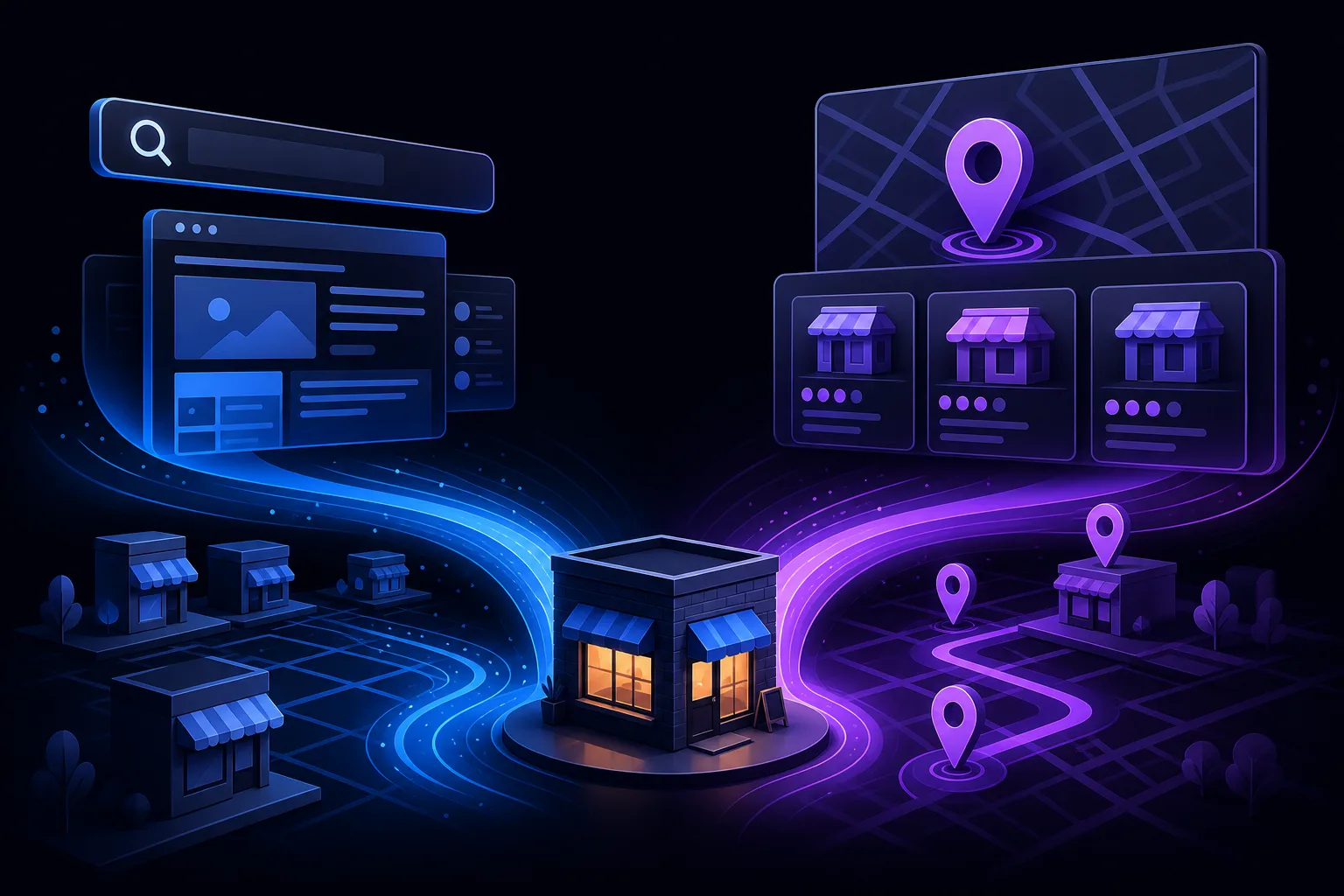
TL;DR: Map Pack clicks tend to convert faster because the searcher is ready to call or visit now. Organic traffic converts at a lower rate but captures researchers and comparison shoppers who often become higher-value customers. Most local businesses need both, but where you invest first depends on your service type, sales cycle, and where you're currently bleeding clicks.
At a Glance
| Map Pack | Organic Search | |
|---|---|---|
| Typical intent | Ready to act now | Researching or comparing |
| Main conversion action | Phone call, directions, click-to-website | Form fill, page read, return visit |
| Speed to convert | Fast (same session) | Slower (multi-touch) |
| What you need to rank | Google Business Profile, reviews, proximity | Content, backlinks, site authority |
| Visibility type | Map + 3-pack on mobile/desktop | Blue links below the fold or above |
| Who it helps most | Emergency or high-frequency services | Professional services, bigger decisions |
What Map Pack Traffic Actually Does
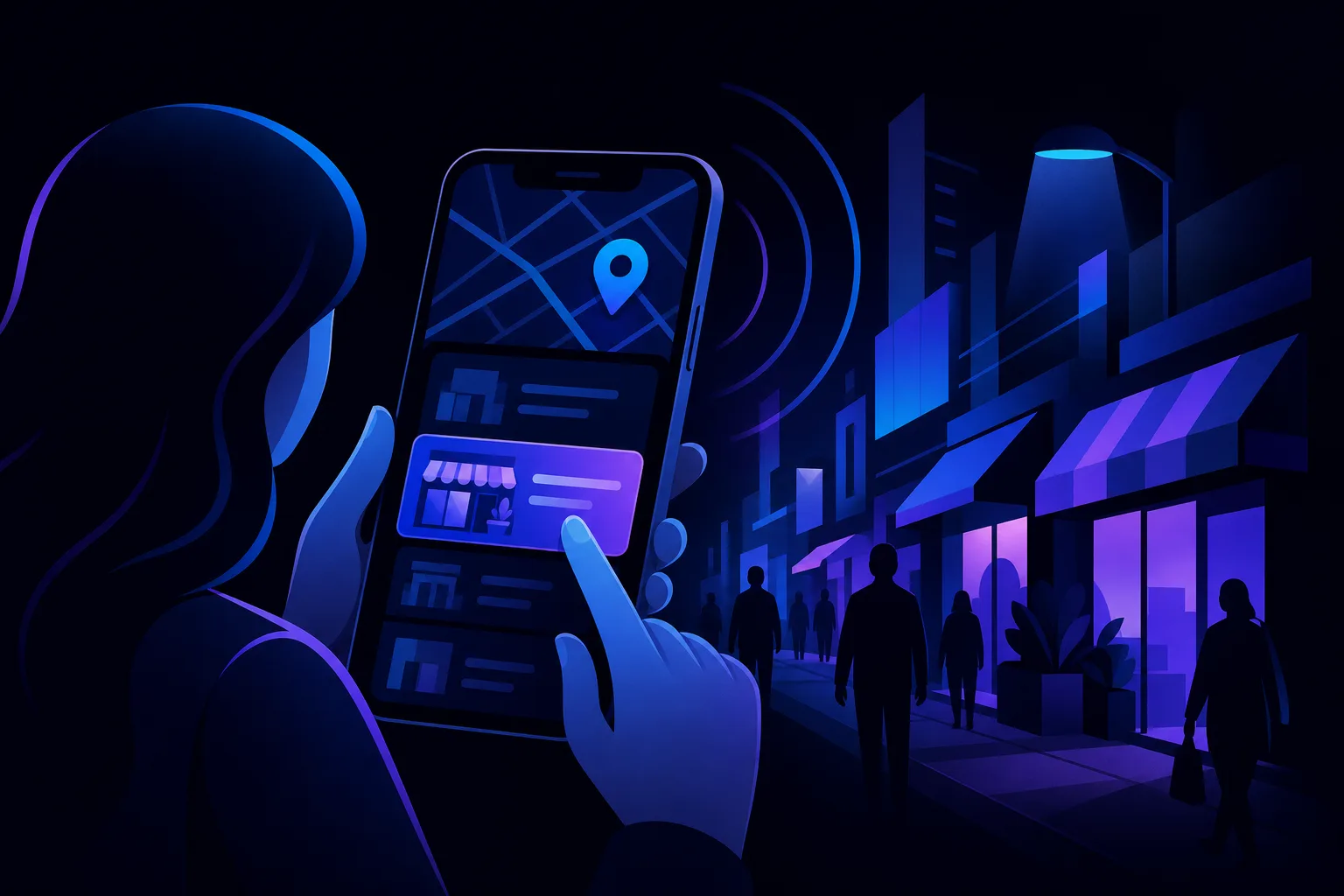
The Map Pack shows three local businesses with a map, star ratings, phone number, and hours. On mobile, it sits above everything else. A searcher typing "AC repair near me" at 2pm on a hot Tuesday is not browsing. They want someone to answer the phone.
That urgency is the Map Pack's superpower. The conversion from impression to call is compressed because Google has already answered the "who" question with your profile. The searcher just has to tap.
The flip side: Map Pack traffic is thin on context. They don't know your pricing philosophy, your warranties, or why you're better than the next listing. Reviews and photos do a lot of heavy lifting. If your profile is sparse or your reviews skew negative, that same urgency works against you.
For trades, urgent repairs, and walk-in businesses (plumbers, locksmiths, urgent care, pizza shops), Map Pack is frequently the highest-ROI local SEO investment.
Takeaway: Map Pack converts fast, but your Google Business Profile has to earn that trust in seconds.
What Organic Traffic Actually Does
Organic listings are the blue links. They sit below the Map Pack, sometimes below ads too. The searcher who scrolls past all of that to click your service page is doing something different: they're investigating.
That investigation is valuable. A family searching "estate planning attorney West Palm Beach" probably isn't calling the first number they find. They're reading your about page, checking your practice areas, maybe reading a blog post you wrote about probate. By the time they fill out your contact form, they've already half-decided.
That longer journey tends to produce higher-quality leads for professional services, high-ticket home improvement, and anything where trust takes time. The law office that ranks for "what happens to my house when I die" and answers it clearly has done the sales work before the phone rings.
Organic traffic also compounds. A well-optimized service page or location page keeps pulling traffic for months without ongoing spend. Map Pack rankings can shift with proximity and review velocity. A piece of content that earns links holds its ground longer.
If you're curious why some pages rank and others don't, this breakdown of service page vs homepage ranking covers the structural reasons.
Takeaway: Organic traffic takes longer to earn but attracts buyers who are already warming up to you.
Find out what your site is leaving on the table Get your free audit
How to Read Your Own Data
Before deciding where to invest, run this diagnostic on your own site:
- Check Google Search Console. Filter by query type. Are your ranking queries navigational (people looking for your name) or discovery (people who don't know you yet)? Discovery clicks from organic are the ones that grow your business.
- Check Google Business Profile Insights. Look at call clicks vs website clicks vs direction requests. A high call-click rate with low website visits means your Map Pack is doing conversion work before the website even loads.
- Check your CRM or call log. Tag leads by source for 30 days. "Found you on Google Maps" and "found your website" are different pipelines with different close rates.
- Compare the average job size or case value by source. If Map Pack calls are mostly one-time repairs and organic leads are bigger projects, that changes where you put the next dollar.
For a fuller list of signals worth tracking, local SEO metrics that actually indicate growth is worth a read.
Takeaway: Your own data is the only comparison that matters. Aggregate studies don't know your zip code or your sales cycle.
The Tradeoffs Worth Knowing
Proximity dependence. Map Pack rankings are heavily weighted by the searcher's location relative to your business address. If your shop is in one part of town, you may not show in the Map Pack five miles away even with perfect reviews. Organic rankings don't have the same hard radius problem. Service area pages can help you cover ground organically that the Map Pack won't. See why service area pages often fail to rank for the common mistakes.
Review velocity. Map Pack rankings respond to reviews in ways organic rankings don't. A plumber with 200 five-star reviews and a complete profile is likely to have a ranking advantage over a plumber with 20 reviews and a thin profile, even if the second plumber has a better website, though Map Pack rankings depend on relevance, distance, and prominence in combination, and reviews are one prominence signal among many. That's useful leverage if you can operationalize asking for reviews. It's a vulnerability if a competitor is more aggressive about it.
Content investment. Organic rankings require actual content: real service pages, location pages, maybe blog posts that answer real questions. That's an investment most Map Pack strategies don't require. But that content, once it ranks, works for free around the clock.
Cannibalization. If you run Google Ads on the same queries where you rank organically, you're sometimes paying for clicks you would have gotten free. Map Pack clicks are also free. That economics picture matters when you're deciding where to focus.
Takeaway: Neither channel is free to maintain, but they pull from different budgets: time and content for organic, reputation management for Map Pack.
Verdict
For most local service businesses, Map Pack traffic converts faster and organic traffic converts better over time. That's not a contradiction. It means you need both, sequenced by what you can actually execute.
If you're a plumber, electrician, or any business where someone needs help today: get your Google Business Profile complete, get reviews coming in consistently, and make sure your phone number is prominent. The Map Pack will do the rest of the heavy lifting.
If you're a law firm, financial advisor, remodeling contractor, or anyone where the decision takes days or weeks: invest in service pages and location content that earns organic rankings. The buyer who read three of your pages before calling is already sold.
If you're not sure where you're losing ground right now, the free AI readiness audit at SmartAleck looks at your local visibility and tells you where the gaps are. Or if you'd rather talk through the specifics of your market, get in touch directly.
Find out what your site is leaving on the table
SmartAleck's free AI readiness audit scores your search presence and shows the exact gaps costing you customers. Two minutes, no sales call.
Frequently asked questions
Does the Map Pack or organic search get more clicks overall?
It varies by query and device, but the Map Pack typically dominates on mobile for high-intent local searches like 'near me' or service-plus-city queries. Organic results capture more clicks for informational or longer research-phase searches. Neither is universally dominant.
Can I rank in both the Map Pack and organic results at the same time?
Yes, and many businesses do. They require different inputs: Google Business Profile optimization drives Map Pack presence, while your website's content and authority drive organic rankings. Appearing in both places for the same query reinforces credibility and doubles your surface area.
Does a bad website hurt my Map Pack ranking?
Indirectly, yes. Google can crawl your website as a signal for your Business Profile, and a thin or broken site may reduce confidence in your listing. More practically, a searcher who clicks from the Map Pack to your website and immediately leaves is a lost lead, regardless of how well you ranked.
How long does it take to see results from each channel?
Based on reported industry observations, Map Pack improvements from profile updates and new reviews can anecdotally show measurable change within weeks. Organic ranking improvements from new or revised content typically take anywhere from a few months to considerably longer, two to six months is a commonly cited industry estimate, sometimes longer in competitive markets, though Google has not officially documented specific timeframes for either channel.
You May Also Like
View All Posts
How to Rank in Google's Local Map Pack (Step by Step)
Google’s local results consider relevance, distance, and prominence. This guide shows practical steps to improve your Business Profile, earn genuine reviews, and keep business details accurate.

Google Ads Match Types for Local Businesses: Which One Wins?
Choosing the wrong Google Ads match type is one of the fastest ways to burn your budget on clicks that never convert. This guide breaks down broad, phrase, and exact match so local business owners can stop guessing and start spending smarter.
Google Ads for Local Services: A Starter Playbook
Google Ads can send paying customers to your door fast, or drain your budget on clicks that never convert. This playbook shows local service businesses exactly how to set up, target, and optimize campaigns that actually work.
Why Your GBP Description Isn't Helping You Rank
Your Google Business Profile description feels important, but Google has confirmed it carries little ranking weight. The fields that actually move the needle are categories, reviews, and your website's on-page signals. Here's where to spend your time instead.