Why Your Local Competitors Keep Appearing in AI Overviews and You Don't
Google AI Overviews pull from a short list of sources it already trusts. If your competitors are on that list and you aren't, it's almost never about luck. It's about structure, authority signals, and content format. Here's what's actually happening.
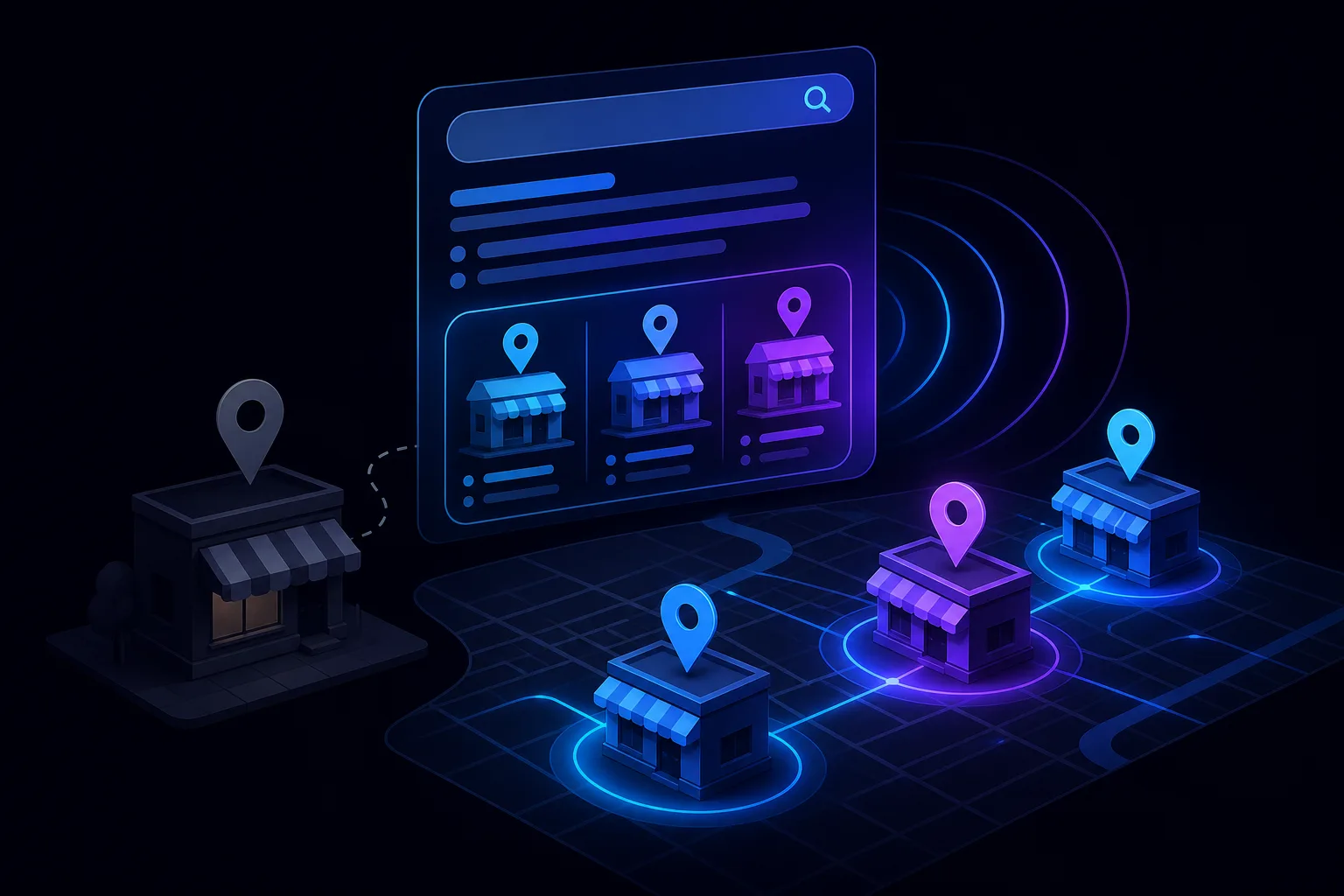
TL;DR: Google's AI Overviews appear to favor sources that are structured, consistent, and already trusted by other authoritative sites. If your competitors appear and you don't, they've likely built the right signals, whether by design or accident. You can close the gap, but it takes specific work, not just better blog posts.
What Happened
Google rolled out AI Overviews broadly in 2024, and small business owners started noticing something uncomfortable: local competitors were getting cited in those summary boxes, pulling answers directly from their websites, while their own sites sat invisible.
This isn't a glitch. AI Overviews are widely speculated to draw on Google's Knowledge Graph and its broader understanding of which sources are reliable, well-structured, and topically relevant, though Google has not confirmed the specific mechanisms. There appear to be observable reasons one plumber gets cited and another doesn't, even when both rank on page one, though the exact causal factors remain unconfirmed.
The businesses showing up most consistently tend to share a few traits: clean, crawlable site architecture; content that directly answers questions in plain language; strong off-site authority signals like consistent citations, backlinks, and a complete Google Business Profile; and structured data markup that tells Google exactly what the page is about.
Why It Matters
AI Overviews now appear above traditional organic results for many informational and local queries. If a user asks "best HVAC repair in [city]" or "do I need a permit for a fence in [county]," Google may serve an AI-generated answer before showing a single blue link. The business cited in that answer gets visibility without requiring a click. The ones not cited are functionally invisible for that query.
This matters for small businesses because industry observations suggest the volume of zero-click searches is growing. Getting into an AI Overview is increasingly how you get seen at all, not just how you rank.
There's also a trust halo effect. When Google cites your business in a summary, users treat it as an endorsement, even if they don't consciously process it that way. A law office in Fort Lauderdale cited in an AI Overview about LLC formation questions will get calls from people who never visited their site directly.
The uncomfortable truth: A competitor who hired someone to build structured content two years ago is reaping AI Overview benefits now, even if they've done nothing since.
Find out what your site is leaving on the table Get your free audit
Why It Matters: The Structural Gaps That Keep You Out
Here are the specific factors Google's systems are observed to evaluate when deciding who to cite. This is a diagnostic, not a checklist you complete once.
1. Topical authority vs. scattered content
Google needs to understand that your site is a reliable source on a specific topic. A repair shop with 40 pages covering every appliance it fixes, written in plain Q&A format, signals authority. A repair shop with one generic "services" page and a contact form signals nothing. If your competitor has a dedicated page answering "how much does it cost to fix a refrigerator compressor in [city]," and you have a paragraph under a tab, they win that citation.
2. Structured data (schema markup)
Schema markup is code you add to a page that tells Google: this is a LocalBusiness, this is a FAQ, this is a service. Without it, Google has to guess. Competitors using LocalBusiness, FAQPage, and Service schema are giving Google a clean map of their content. Without schema, your pages are harder to parse, so they get passed over.
3. Citation consistency and off-site trust
AI Overviews appear to pull from sources Google already trusts across the web, not just your own site. That means your NAP (name, address, phone) needs to be consistent across directories, your Google Business Profile needs to be complete and active, and you ideally have a few credible sites linking to yours. A local attorney mentioned in a bar association directory and a regional legal blog carries more weight than one with no off-site footprint.
4. Content format: answers, not paragraphs
Google's AI is extracting direct answers. If your content is written in long, meandering paragraphs optimized for word count, it's harder to extract from. Competitors who write in a question-answer format, use headers that mirror real search queries, and get to the point in the first sentence are easier to cite. The AI doesn't need to infer the answer. It's right there.
5. E-E-A-T signals
Experience, Expertise, Authoritativeness, and Trustworthiness is the framework described in Google's Search Quality Evaluator Guidelines as a way to assess content quality. Google has clarified that E-E-A-T is not itself a direct ranking signal but describes what quality raters assess, it is widely believed to inform the development of Google's ranking systems, though Google has not confirmed it as a direct factor. For a local business, this means: does the site include real credentials, years in business, service area, and genuine customer-facing information? A plumber whose site lists licensing info, service area, and has reviews integrated via GBP is more trustworthy than one with a stock photo and a form.
Takeaway: AI Overviews are a content and structure problem, not a marketing spend problem.
What We Don't Know Yet
Google hasn't published a definitive list of AI Overview ranking factors, and the system is still changing. A few open questions:
- How much does GBP engagement weight matter? Businesses with active GBPs may have an edge, but the degree isn't confirmed.
- Will hyper-local content continue to outperform generic content? Right now, it appears so, but Google's retrieval systems evolve quickly.
- Can small businesses compete with media sites? For local queries, yes, the evidence suggests local businesses with strong topical authority regularly outrank generalist sites. For broad informational queries, it's less clear.
- How stable are these citations? Individual citations can disappear. As covered elsewhere, AI Overview citations are not permanent. Building broad structural authority is safer than optimizing for one specific citation.
What to Do About It
Here's a practical sequence, ordered by impact for most small businesses:
Audit your content structure. For every service you offer, do you have a dedicated page that answers the most common question a customer would ask? Not a paragraph. A page. If not, that's your first gap.
Add schema markup. At minimum:
LocalBusinessschema on your homepage,Serviceschema on each service page,FAQPageschema on pages that answer questions. If your site was built without this, it needs to be added, not bolted on loosely.Clean up your off-site citations. Check your NAP consistency across Google, Yelp, Bing Places, and the top 20 industry directories relevant to your category. Inconsistencies confuse Google's entity resolution and reduce trust.
Rewrite for extraction. Pick your five most important pages and rewrite the opening paragraph of each so it answers the page's core question in the first two sentences. Use H2s that mirror real questions. This is the fastest structural win.
Strengthen your GBP. A complete, active Google Business Profile, with accurate categories, photos, posts, and consistent responses to reviews, feeds Google's understanding of your business entity. It's not optional for AI visibility.
If you want to know exactly where your site stands on these dimensions right now, the free AI readiness audit is built to surface the specific gaps that keep local businesses out of AI-generated results. It's not a generic score. It identifies structural problems.
For businesses that want help closing those gaps without learning schema by hand, SmartAleck's AI search visibility services are designed specifically for small and midsize local businesses that need this done without hiring an in-house SEO team.
And if you want to see what this work looks like in practice, the client case studies show real local businesses and what changed after their sites were restructured for AI visibility.
The bottom line: Your competitors aren't appearing in AI Overviews because they're smarter or luckier. They appear to have more of the right signals. That's fixable.
Find out what your site is leaving on the table
SmartAleck's free AI readiness audit scores your search presence and shows the exact gaps costing you customers. Two minutes, no sales call.
Frequently asked questions
Does having a Google Business Profile help you appear in AI Overviews?
An active, complete Google Business Profile strengthens Google's understanding of your business as a trusted local entity, which does appear to help with AI Overview eligibility. It's not the only factor, but it feeds the same trust signals Google uses to decide what to cite. Treat it as a floor, not a ceiling.
How long does it take to start appearing in AI Overviews after making structural changes?
There's no fixed timeline, and Google hasn't published one. Most businesses see changes in crawl and indexing within weeks of significant structural updates, but AI Overview inclusion can take longer since it depends on trust signals that build over time. Schema markup and content rewrites tend to show faster signals than off-site authority work.
Can a small business compete with big national sites for AI Overview citations on local queries?
For genuinely local queries, yes. A plumber in Boca Raton asking "how much does it cost to repipe a house in Boca Raton" is a question a national plumbing franchise rarely answers with local specificity. Local topical authority on hyper-local queries is one area where small businesses can consistently outperform larger competitors.
Is schema markup enough on its own to get into AI Overviews?
No. Schema helps Google parse and trust your content, but it won't overcome thin content, weak off-site authority, or a site with no topical depth. Think of schema as removing friction, not as creating authority. You need the structural signals working together.
You May Also Like
View All Posts
Why Your Business Isn't in AI Answer Summaries
AI search tools like ChatGPT, Perplexity, and Google's AI Overviews are answering questions your customers used to Google. If your business isn't in those answers, you're losing leads you never even see. Here's the plain-spoken breakdown of why, and what to do.
How AI Search Results Change the Way Customers Find Local Businesses
AI summaries and local results can shape how customers discover a business. Learn how to keep your website and Business Profile accurate, answer real questions, and measure the results.
Why Your AI Overview Citation Disappeared Overnight
Google's AI Overviews pull citations dynamically, and yours can vanish without any manual penalty or warning. Here's what actually causes citation drops, what signals Google watches, and the practical steps to get your site back in the answer.
Why Your GBP Service List Affects More Than You Think
Most business owners treat the GBP service list as a formality. It isn't. The services you add, name, and describe directly influence which searches you show up for, what AI assistants say about you, and whether a searcher becomes a caller.