Why Your Business Isn't in AI Answer Summaries
AI search tools like ChatGPT, Perplexity, and Google's AI Overviews are answering questions your customers used to Google. If your business isn't in those answers, you're losing leads you never even see. Here's the plain-spoken breakdown of why, and what to do.
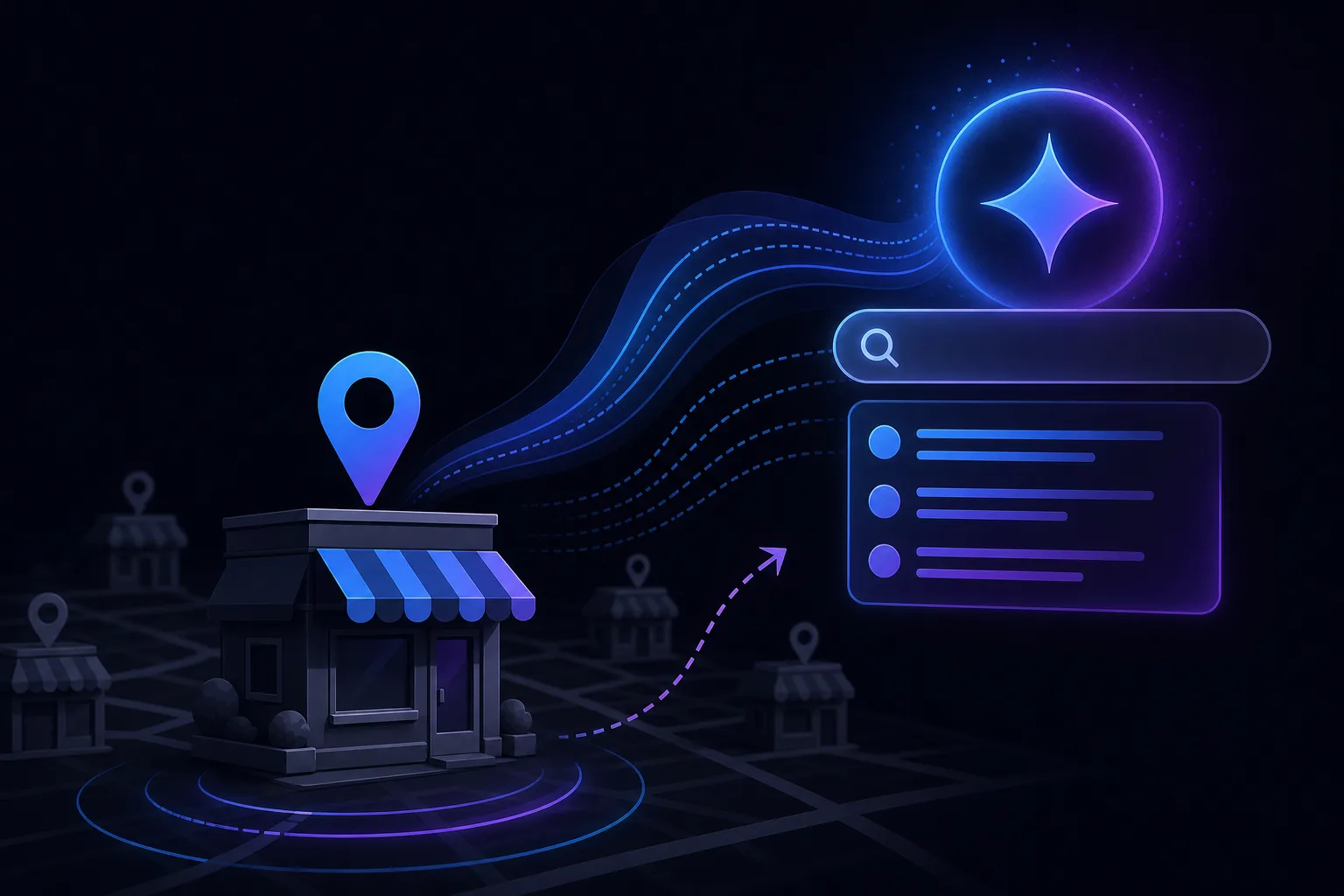
TL;DR: AI answer engines pull from sources they consider authoritative, structured, and trustworthy. Most small business websites fail all three tests without realizing it. Fixing this is not about gaming anything, it's about making your content easy for a machine to read, verify, and repeat.
What Happened
Search behavior has been shifting for a couple of years, but 2024 and 2025 accelerated it fast. Google rolled out AI Overviews (the summary block that now sits above organic results on many queries). ChatGPT added web browsing. Perplexity built a search product that skips the blue links entirely and just tells users the answer. Microsoft's Copilot does the same inside Windows and Edge.
These tools don't show a list of ten websites and let the user decide. They synthesize an answer from sources they trust, credit a few of them with citations, and send the user on their way. If your plumbing company, law office, or appliance repair shop isn't one of those cited sources, you don't exist in that interaction.
The queries that trigger AI answers tend to be the high-intent, specific questions your best customers ask. Things like "what's the average cost to replace a water heater in West Palm Beach" or "do I need a lawyer for a minor car accident in Florida." These are not casual searches. These are people with a problem and a credit card.
Takeaway: The most valuable searches are now answered before the user ever clicks a link, and most small businesses aren't in those answers.
Why It Matters
Here's the thing nobody in the SEO industry wants to say plainly: traditional organic rankings still matter, but they're becoming table stakes. Being on page one used to mean you got traffic. Now being on page one can mean you get zero clicks because the AI answered the question at the top of the page.
Studies from major search analytics firms have tracked a steady rise in zero-click searches over the past few years. AI Overviews accelerated that trend sharply. If your traffic strategy depends entirely on people clicking your blue link, you're building on sand.
But here's the flip side. Businesses that do get cited in AI answers pick up an outsized credibility signal. The AI essentially vouches for you in front of the customer. That's not nothing.
For local businesses especially, this cuts deep. A law firm that shows up in the AI answer when someone asks "do I need a personal injury lawyer in Florida" gets the equivalent of a warm referral. A law firm that doesn't show up doesn't get a second chance, because the user already has their answer.
And the invisibility compounds. If AI tools don't cite you now, they don't learn from citing you. The gap between businesses with AI visibility and those without it is going to widen, not close on its own.
Takeaway: AI answer visibility isn't a future problem. It's already costing businesses leads they'll never know they missed.
Find out what your site is leaving on the table Get your free audit
Why Most Small Business Sites Don't Make the Cut
This is where it gets practical. AI models and retrieval systems look for a handful of signals when deciding what to cite. Most small business websites fail several of them at once.
Thin or vague content. A service page that says "we offer quality plumbing services in South Florida" tells an AI model nothing useful. It can't extract a specific claim, a price range, a process, or a fact. It has nothing to quote. Pages that answer real questions with real specificity are the ones that get pulled.
No structured data. Schema markup is the shorthand that tells machines what your page is actually about. A page without schema forces the AI to guess. Sometimes it guesses right. Often it skips your page entirely for one that makes it obvious. We've covered how schema markup works for local businesses in detail if you need the full breakdown.
No demonstrable authority or trust signals. AI systems favor sources that other credible sources reference. That means backlinks still matter, but so do things like your Google Business Profile, consistent NAP (name, address, phone) data across the web, third-party reviews, and whether legitimate publications have mentioned you. A brand new site with no external footprint is going to struggle.
Content that doesn't match how people actually ask questions. Most small business content is written for search bots from 2015. It stuffs keywords into headings and calls it a day. AI answer engines are trained on natural language. They respond to content that answers questions in plain, complete sentences, the way a helpful person would.
No clear entity definition. AI models try to identify what an entity (your business) is, what it does, where it operates, and who it serves. If your website, GBP, social profiles, and third-party listings all say slightly different things, the model gets confused and deprioritizes you. Consistency across your entire online footprint is not optional.
If you want to know exactly where your site falls short, a free AI readiness audit will tell you in plain language.
Takeaway: AI models skip your business not out of spite, but because your site gives them nothing useful to work with.
What We Don't Know Yet
Anyone who tells you they have AI answer optimization completely figured out is selling something.
Google has not published a definitive guide to how AI Overviews chooses its sources. OpenAI has not explained ChatGPT's citation logic in technical detail. Perplexity's ranking signals are inferred from testing, not confirmed documentation.
What practitioners have observed through testing suggests that structured content, clear entity signals, and genuine topical authority correlate with being cited. But "correlates with" is not the same as "guarantees."
We also don't know how stable AI answer results are. They change more frequently than traditional search results. A business that gets cited today may not be cited next month if a better-structured competitor enters the picture. The channel is real, but it's not a set-and-forget solution.
What we do know is that the fundamentals that help AI visibility, clear content, structured data, a consistent entity footprint, and genuine authority, are the same fundamentals that help traditional SEO and your Google Business Profile. So working on AI visibility is not a gamble. It's just good practice with a new audience.
Takeaway: The uncertainty is real, but the fundamentals you'd work on are the same ones you should already be working on.
What to Do About It
Here's the practical list. None of this is exotic.
1. Rewrite your service pages to answer real questions. Stop writing for keywords. Start writing for the questions your actual customers ask. If someone calls your shop asking "how long does a transmission repair take," that question deserves a clear answer on your website. Writing service pages that answer real questions is the single highest-leverage move most small businesses can make right now.
2. Add and maintain structured data. At minimum, your site should have LocalBusiness schema, service schema on relevant pages, and FAQ schema on pages that answer specific questions. If you haven't touched schema yet, that's a gap. Check the schema markup explainer and then get it implemented.
3. Lock down your entity consistency. Your business name, address, phone number, and category should be identical across your website, Google Business Profile, Yelp, Facebook, and every directory that lists you. Run a domain health check to see where you have inconsistencies.
4. Build topical content around the questions your customers actually have. One strong FAQ page or blog post that genuinely answers a common question is worth more than ten thin service pages. Think about the questions you answer on the phone every week. Each of those is a content opportunity. We wrote about turning customer questions into AI-citable content if you want the framework.
5. Get your Google Business Profile in real shape. GBP is a major trust signal for local AI answers. Posts, photos, Q&A, and category accuracy all matter. If yours is sitting untouched from 2022, that's a problem.
6. Earn citations and mentions from credible sources. Local news coverage, industry directories, chamber of commerce listings, and even well-structured press releases can help establish that your business is real, local, and authoritative. This takes time, but there's no shortcut that doesn't eventually get penalized.
If you want a customized diagnosis of exactly what's keeping your business out of AI answers, the AI search visibility audit is built for that. You can also talk to a real person if you want to think through your specific situation before committing to anything.
Takeaway: AI visibility is earned the same way real credibility is earned. Be specific, be consistent, and give the machine something worth quoting.
Find out what your site is leaving on the table
SmartAleck's free AI readiness audit scores your search presence and shows the exact gaps costing you customers. Two minutes, no sales call.
Frequently asked questions
What are AI-generated answer summaries and how do they affect my business?
AI answer summaries are the synthesized responses shown by tools like Google's AI Overviews, ChatGPT, and Perplexity instead of a traditional list of links. They pull from a small set of sources they consider authoritative and cite those sources in their answer. If your business isn't one of those sources, you're invisible to anyone who gets their answer from the summary and never clicks through to search results.
Does traditional SEO still matter if AI answers are replacing search results?
Yes, but it's no longer sufficient on its own. Traditional rankings still drive traffic for queries that don't trigger AI summaries, and strong SEO fundamentals like structured data, clear content, and authoritative backlinks also help AI visibility. Think of AI optimization as an extension of good SEO practice, not a replacement for it.
How does Google decide which businesses to cite in AI Overviews?
Google hasn't published a definitive guide, but testing by SEO practitioners suggests that well-structured content, schema markup, topical authority, and consistent entity information (name, address, phone, category) across the web all correlate with being cited. Pages that directly answer a specific question in clear language tend to perform better than keyword-stuffed service pages.
Is AI answer visibility something a small local business can actually achieve?
Yes, and in some ways small businesses have an advantage. Local queries like 'best HVAC company in [city]' or 'do I need a lawyer for a fender bender in Florida' are exactly the kind of specific, high-intent questions AI answers love to address. A local business with well-structured content, a healthy Google Business Profile, and consistent citations is a very credible candidate for those answers.
How long does it take to start appearing in AI-generated answers?
There's no reliable timeline because AI answer results change more frequently than traditional search rankings and the selection logic isn't fully transparent. Businesses that fix foundational issues (thin content, missing schema, inconsistent listings) typically see changes in organic and AI visibility within a few weeks to a few months, but it's not instant and requires ongoing maintenance.
What's the fastest thing I can do right now to improve my AI search visibility?
Rewrite at least one key service page to directly answer the three or four questions your customers most commonly ask about that service. Include specific details: typical costs, timelines, what the process involves, and what makes your business different. That kind of specific, structured content is exactly what AI answer engines are looking for, and it doubles as better sales copy for human visitors too.
You May Also Like
View All Posts
How AI Search Results Change the Way Customers Find Local Businesses
AI summaries and local results can shape how customers discover a business. Learn how to keep your website and Business Profile accurate, answer real questions, and measure the results.

What Is Answer Engine Optimization and Do You Need It?
Answer engine optimization is an industry term for making useful content discoverable in answer-oriented search. Learn what overlaps with SEO and which AI citation promises to ignore.
Google AI Overviews: How to Keep Earning Clicks in 2026
Google AI Overviews can answer questions and link to sources. Learn how to measure their effect on your own search traffic and keep publishing useful local and service content.
Why Your GBP Service List Affects More Than You Think
Most business owners treat the GBP service list as a formality. It isn't. The services you add, name, and describe directly influence which searches you show up for, what AI assistants say about you, and whether a searcher becomes a caller.