Why AI Chatbots Cite Some Businesses and Ignore Others
AI chatbots don't pull business names out of thin air. They surface businesses that have built a clear, consistent, and well-sourced digital footprint. Here's what separates the cited from the invisible, and what you can actually do about it.
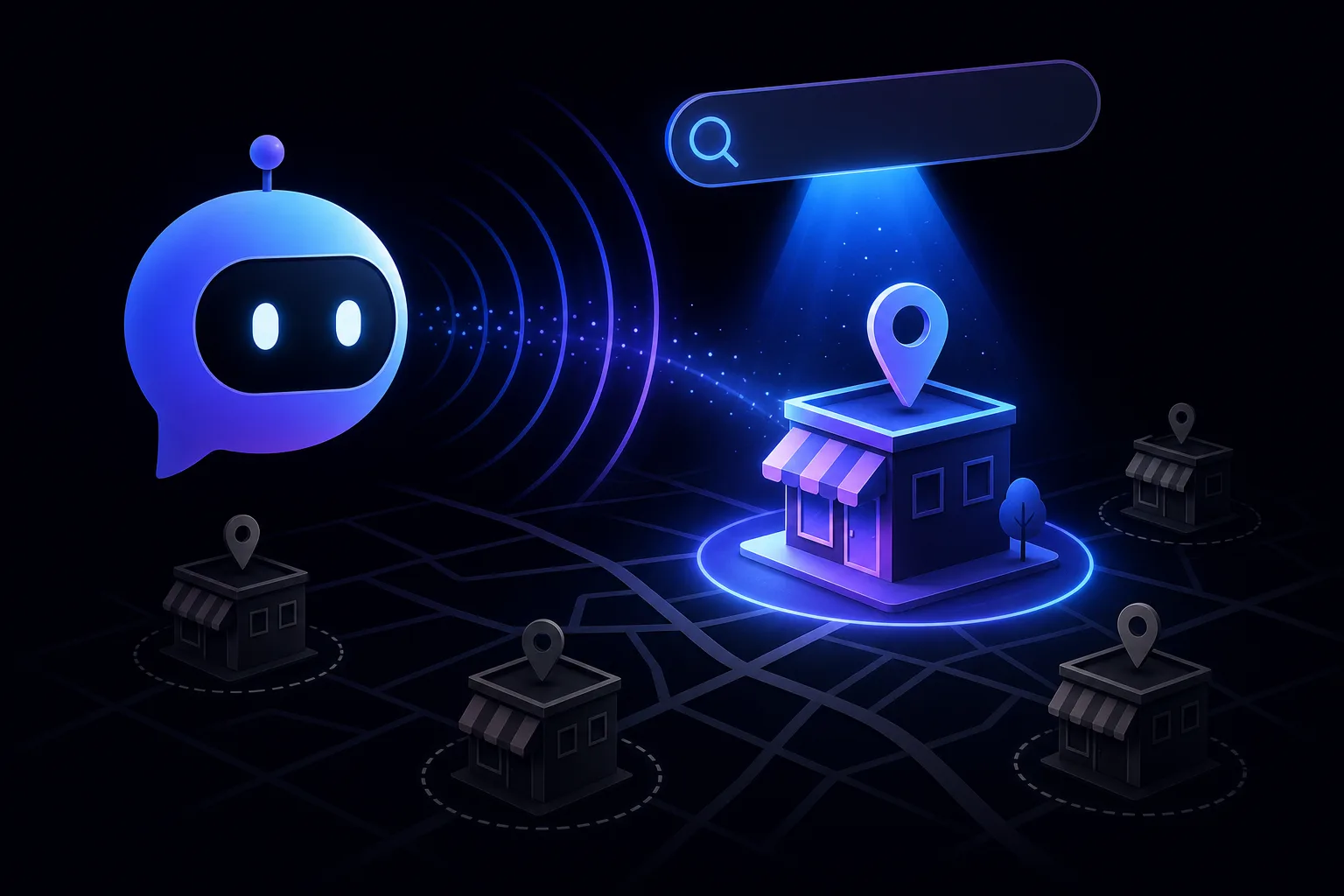
TL;DR: AI chatbots cite businesses that are well-documented across trustworthy sources, have clear topical authority, and whose information is easy for a language model to parse and verify. It's not luck, it's not who spent the most on ads, and it has almost nothing to do with your Google Ads account.
What Happened
Businesses and their owners are noticing something uncomfortable: they search for their own category in ChatGPT, Perplexity, or Google's AI Overviews, and a competitor they've never worried about shows up. They don't. Nobody called it. Nobody voted on it. The AI just decided.
This isn't a glitch. It's the output of a system that was never designed with "fairness to local businesses" as a goal. Large language models and AI search tools generate responses by synthesizing text from the web. They recommend businesses they have enough reliable data about to feel, if you can use that word, confident.
The businesses getting cited have something in common: they're legible to machines. Their information appears in enough credible places, in a consistent enough form, that the model can surface them without making things up.
Why It Matters
AI-assisted search is eating a growing share of the queries that used to go straight to a Google results page. When someone asks an AI "who's the best HVAC company in [city]" or "recommend a family law attorney near me," they often act on the first answer they get. There's no page 2 to scroll to.
If your business isn't in that answer, you don't lose a ranking, you lose the conversation entirely.
Here's what the AI is actually responding to:
1. Source credibility and breadth
AI models are trained on, and actively retrieve from, trusted third-party sources: review platforms, local news mentions, industry directories, government licensing databases, local chamber sites, and so on. A plumber with a Google Business Profile, ten Yelp reviews, a mention in a local "best of" article, and a BBB listing looks very different to an AI than a plumber with only a website.
The more credible, independent sources that describe your business in consistent terms, the more confident the model is when it mentions you.
2. Structured, parseable information on your own site
AI tools index the web. If your site buries your services in generic marketing copy, the model may not understand what you actually do or who you serve. Schema markup, clear service pages, and FAQ content written in plain question-and-answer format give models something to grab onto. A law office with a page titled "Divorce Attorney in West Palm Beach" that answers "What does a divorce attorney do?" in plain language is much easier to cite accurately than one whose homepage just says "Trusted Legal Excellence Since 1989."
See Schema Markup for Local Businesses, Explained Simply for the practical version of this.
3. Topical authority in a specific niche
AI doesn't reward generalists the way a yellow pages listing did. A repair shop that publishes content about specific repair problems, answers real customer questions, and has other sites linking to it as a resource reads as an authority. A repair shop with a five-page brochure site does not.
This is the content angle: Turn Customer Questions Into AI-Citable Content covers exactly how to do this without becoming a content farm.
4. Consistency of your core information (NAP)
Name, address, phone number: if these differ across your website, your Google Business Profile, Yelp, and a dozen directory listings, the AI has conflicting data points. Models are cautious about surfacing businesses when the data doesn't agree. This is also basic local SEO hygiene, which means fixing it helps you in both traditional and AI search.
5. Review volume and sentiment
Reviews are public, structured text about your business written by third parties. That's basically ideal training and retrieval data. A business with 80 detailed reviews that mention specific services is giving the model a lot to work with. A business with 4 reviews that say "Great!" is not.
One-line takeaway: AI models cite businesses they can describe accurately and confidently, not businesses that paid to be there.
Find out what your site is leaving on the table Get your free audit
What We Don't Know Yet
AI search is moving fast enough that anyone claiming certainty about the exact ranking signals is selling something.
We don't know precisely how much weight each AI platform places on real-time retrieval versus what was baked into training data. We don't know whether Perplexity, ChatGPT with search, and Google AI Overviews weight the same signals the same way. And we don't know yet how paid placement in AI search products will reshape organic citation patterns, because that market is still forming.
What we do know is that the businesses showing up consistently across platforms share the traits above. The underlying logic of "cite what you can verify from credible sources" is not going away, regardless of how the products evolve.
What to Do About It
You don't need to rebuild everything at once. Here's a diagnostic sequence:
Check your information consistency first. Search your business name across Google, Yelp, Apple Maps, and a few directories. If your address or phone number varies anywhere, fix those before anything else.
Audit your third-party presence. Count the number of credible, independent sources that mention your business. If it's fewer than five or six, closing that gap matters more than tweaking your website copy.
Read your own site like a machine would. Does your homepage clearly state what you do, where you do it, and for whom? Do you have service-specific pages? If someone trained an AI on only your website, would it know enough to recommend you?
Look at your review situation honestly. Volume matters, but so does content. Encourage customers to leave reviews that mention the specific service they used.
Add structured content. FAQ pages, service explainers, and local topic articles all give AI retrieval systems something to pull from. These don't need to be long. They need to be accurate, specific, and actually answer something.
If you want a baseline read on where you stand, SmartAleck's free AI readiness audit looks at the signals that determine whether an AI is likely to surface your business or skip over it. If what you find suggests a bigger structural problem, the AI search visibility service goes deeper.
Self-help works fine for steps 1 through 4. Step 5 and beyond, especially if you're in a competitive local category, is where having someone who does this for a living tends to pay off faster than experimenting on your own.
Find out what your site is leaving on the table
SmartAleck's free AI readiness audit scores your search presence and shows the exact gaps costing you customers. Two minutes, no sales call.
Frequently asked questions
Does paying for Google Ads help my business get cited by AI chatbots?
No. AI citation is driven by organic signals: third-party mentions, structured site content, reviews, and data consistency. Paid ads run in separate systems and don't influence whether a language model or AI retrieval tool surfaces your business in a conversational response.
How long does it take before changes I make start showing up in AI answers?
There's no reliable timeline, and anyone who gives you a precise number is guessing. AI models update at different intervals, and retrieval-augmented systems like Perplexity index the web more frequently than a model's training cycle. Generally, fixing data consistency and building third-party presence is a months-long project, not a days-long one.
Do AI chatbots favor businesses with more backlinks?
Backlinks are one signal among several. They matter because they represent independent third-party validation, which is exactly what AI retrieval systems are looking for. But a few high-quality, relevant links from local news or industry sources tend to be worth more than dozens of low-quality directory links.
Can a business with no website still get cited by AI chatbots?
It's possible but uncommon for anything beyond a basic name-and-address mention. Without a website, you have no structured content for the AI to draw from, which limits how specifically and confidently it can describe what you do. A minimal but well-structured site is almost always worth having.
You May Also Like
View All Posts
Why Your Business Isn't in AI Answer Summaries
AI search tools like ChatGPT, Perplexity, and Google's AI Overviews are answering questions your customers used to Google. If your business isn't in those answers, you're losing leads you never even see. Here's the plain-spoken breakdown of why, and what to do.

How AI Search Results Change the Way Customers Find Local Businesses
AI summaries and local results can shape how customers discover a business. Learn how to keep your website and Business Profile accurate, answer real questions, and measure the results.

Should Your Small Business Have an AI Chatbot in 2026?
AI chatbots are everywhere, and every vendor wants to sell you one. But does your plumbing company, law office, or repair shop actually need a chatbot in 2026? Here is how to decide without the hype.

Internal Linking for Local SEO: How to Structure Your Site Pages
Internal linking tells Google which pages matter most on your site and helps visitors find what they need. For local businesses, a smart link structure moves authority from your homepage to your service and location pages, where rankings actually pay off.