What Is Proximity Bias in Local Search and Can You Overcome It?
Google's local algorithm favors businesses physically closer to the searcher, sometimes more than reviews or optimization. Here's how proximity bias works, why it's not fully beatable, and what actually moves the needle for businesses stuck outside the radius.
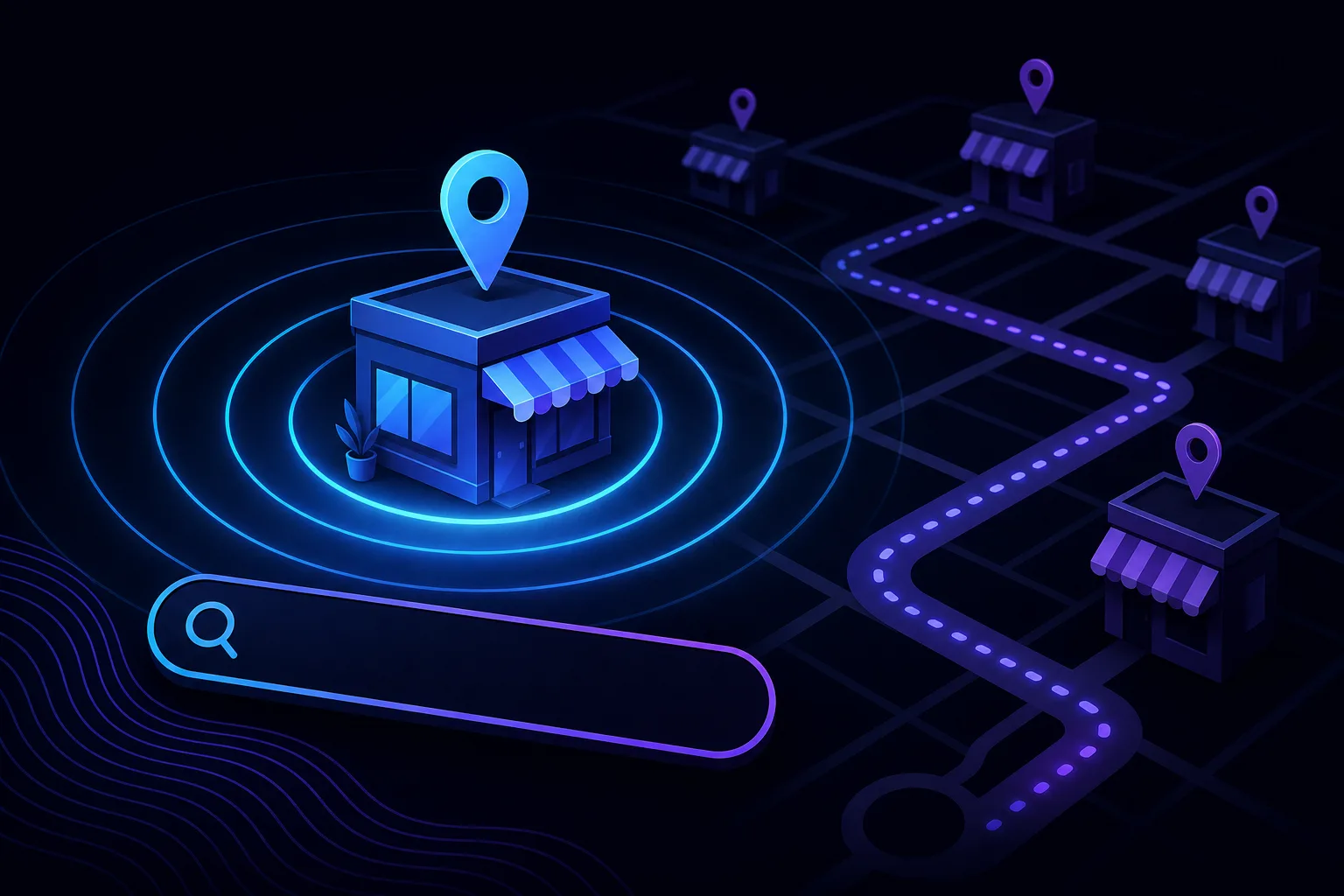
TL;DR: Proximity bias is Google's tendency to rank the physically closest relevant business higher in local search, even if a farther business has better reviews or a more optimized profile. You can't eliminate the effect, but you can reduce its damage with service area pages, GBP structure, and review volume that make Google more confident you deserve visibility outside your immediate zip code.
What happened
Business owners keep noticing the same thing: they've got more reviews, a better website, and sharper photos than the guy three miles away, and he still shows up above them in the map pack. That's not a glitch. That's proximity bias doing exactly what it's designed to do.
Google's local ranking system weighs three main factors: relevance, prominence, and distance. Distance isn't a tiebreaker, it's baked into the formula from the start. For a searcher standing in a specific location typing "plumber near me," Google assumes closer is more useful, and it will often rank a mediocre but nearby business over a stronger one a few miles out. Google confirms proximity as one of the three core local ranking signals in its own documentation, though it doesn't publish the exact weighting.
This has always existed, but it's gotten more visible as more businesses have caught up on the basics: full GBP profiles, consistent NAP data, decent review counts. When everyone's optimization looks similar, distance becomes the tiebreaker more often, not less.
Why it matters
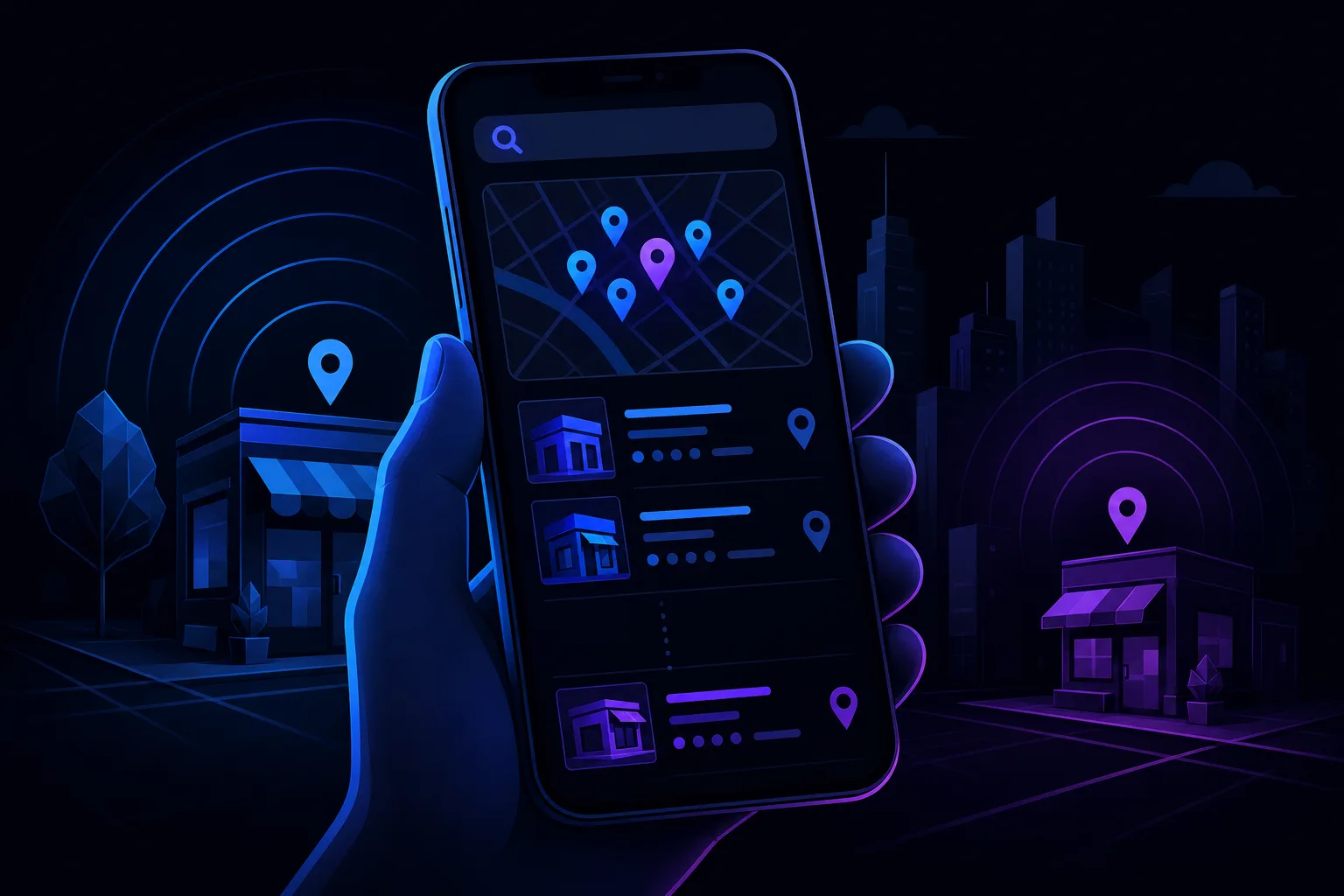
Proximity bias explains a specific, recurring frustration: strong performance in search rankings that doesn't translate to map pack visibility everywhere you want it. A law office in West Palm Beach might rank great for searches originating downtown and nearly invisible for the same search made from a suburb 12 miles out, even though it's the same firm, same website, same reviews.
This matters most for three kinds of businesses:
- Service-area businesses (plumbers, electricians, cleaners) who drive to customers rather than the other way around, and want visibility across a whole metro, not just a single radius.
- Multi-location businesses trying to figure out why one location dominates and another underperforms despite similar effort.
- Newer or relocated businesses competing against long-established shops that happen to sit closer to dense population centers.
If you don't understand proximity bias, you'll misdiagnose the problem. Owners often assume weak map pack rankings mean bad reviews or a broken GBP listing, and they pour effort into fixing things that were never broken. Meanwhile the real constraint, physical distance from the searcher, doesn't move no matter how many five-star reviews come in.
One-line takeaway: if your rankings look great close to home and fade fast a few miles out, that's proximity bias, not a broken profile.
Find out what your site is leaving on the table Get your free audit
What we don't know yet
Google doesn't publish the exact weighting between relevance, prominence, and distance, and that weighting appears to shift by category and by how competitive a given search term is. A search for "emergency locksmith" likely leans harder on proximity than a search for "family law attorney," because urgency changes what a searcher actually needs. Nobody outside Google has a reliable formula for how much prominence can offset distance in a given industry.
It's also unclear how consistent the effect is across geographies. Dense urban areas with dozens of competitors in a two-mile radius probably show a sharper proximity cliff than rural areas where the nearest three competitors are all fifteen minutes away. Anecdotal reports and industry commentary suggest this, but there's no clean public data confirming exact distance thresholds.
Finally, we don't know how proximity bias will shift as AI-driven search results (AI Overviews, chat-based assistants) start handling more local queries. Those systems may weigh proximity differently than the traditional map pack, since they're often summarizing rather than ranking a list. That's a live variable worth watching, not a settled fact.
What to do about it
You can't turn off proximity bias. But you can build a profile and web presence that performs better within its constraints.
- Audit where you're actually showing up. Use rank tracking by zip code or a grid-based local ranking check, not just "am I ranking for X keyword." A single average position tells you nothing about geographic gaps.
- Build dedicated service area pages for each city or region you actually serve, not just your headquarters city. Thin, duplicated area pages don't help; genuinely useful pages with local specifics do. If your service pages already outperform your homepage, that's a sign the format works, you just need more of them done right, see why service pages rank but the homepage doesn't.
- Fix any service area page that's stuck. If you've built these pages and they're still not ranking, the fix usually isn't more pages, it's structure, internal linking, or genuine local content. Here's a breakdown of why service area pages fail to rank and how to fix it.
- Increase review volume and recency, not just star rating. Prominence is the one lever that can meaningfully offset distance. A steady drip of recent reviews signals activity and trust in a way a stagnant 4.8 from two years ago doesn't.
- Consider a second, legitimate location or a service hub if a huge chunk of your customer base sits outside your effective radius. This only works if it's a real, staffed location, not a virtual mailbox. Google has cracked down hard on fake listings for this exact reason.
- Separate paid from organic strategy for distant geography. If proximity bias is capping your organic map pack visibility in outer zip codes, Google Ads can fill that gap immediately while your organic footprint builds over months, not days.
If you're not sure whether your visibility gap is proximity bias, a technical GBP issue, or something else entirely, run a free AI readiness audit to see where the actual gaps are before spending money guessing. For businesses juggling multiple locations or a wide service area, it's often worth a direct conversation, contact SmartAleck and we'll walk through what's fixable versus what's just geography.
One-line takeaway: you can't beat distance, but you can out-build it with more relevant pages, more reviews, and smarter ad spend where organic can't reach.
Find out what your site is leaving on the table
SmartAleck's free AI readiness audit scores your search presence and shows the exact gaps costing you customers. Two minutes, no sales call.
Frequently asked questions
Does proximity bias affect all business types equally?
No. Urgent or emergency services (locksmiths, plumbers, towing) tend to see a stronger proximity effect because Google assumes the searcher wants the closest available option. Less time-sensitive services, like a law office or accountant, may see prominence and relevance carry more relative weight.
Can a second business location help overcome proximity bias?
It can, but only if it's a real, staffed location with genuine business activity. Google has actively removed listings tied to virtual offices or mailbox addresses used solely to game local rankings, so this only works as a legitimate expansion, not a shortcut.
Is proximity bias the same across Google Maps and AI-powered search results?
It's not confirmed either way. AI Overviews and chat-based assistants may weigh location differently since they summarize answers rather than rank a list of results, but there's no public data yet showing how strongly proximity factors into those systems.
How do I know if my ranking problem is proximity bias or something else?
Check whether your rankings are strong close to your business address and drop off sharply a few miles out. If so, that pattern points to proximity bias. If rankings are weak everywhere, including nearby, the issue is more likely profile completeness, reviews, or technical SEO problems unrelated to distance.
You May Also Like
View All Posts
How AI Search Results Change the Way Customers Find Local Businesses
AI summaries and local results can shape how customers discover a business. Learn how to keep your website and Business Profile accurate, answer real questions, and measure the results.

Local Search Ranking Factors: What Google Actually Documents
Google identifies relevance, distance, and prominence as the main local-ranking factors. Here are practical checks for your Business Profile, reviews, website, and service area.

How to Rank in Google's Local Map Pack (Step by Step)
Google’s local results consider relevance, distance, and prominence. This guide shows practical steps to improve your Business Profile, earn genuine reviews, and keep business details accurate.
Competitor Outranking You on Google Maps? Fix It
When a competitor camps out above you in the Google Maps 3-pack, it's rarely luck. It's a checklist you haven't finished. Here's how to diagnose the gap and close it, step by step.