Landing Page vs Homepage for Google Ads: Which Wins?
Homepage or landing page, where should your Google Ads clicks go? We break down the real tradeoffs with plumber, lawyer, and repair shop examples so you stop guessing and start converting.
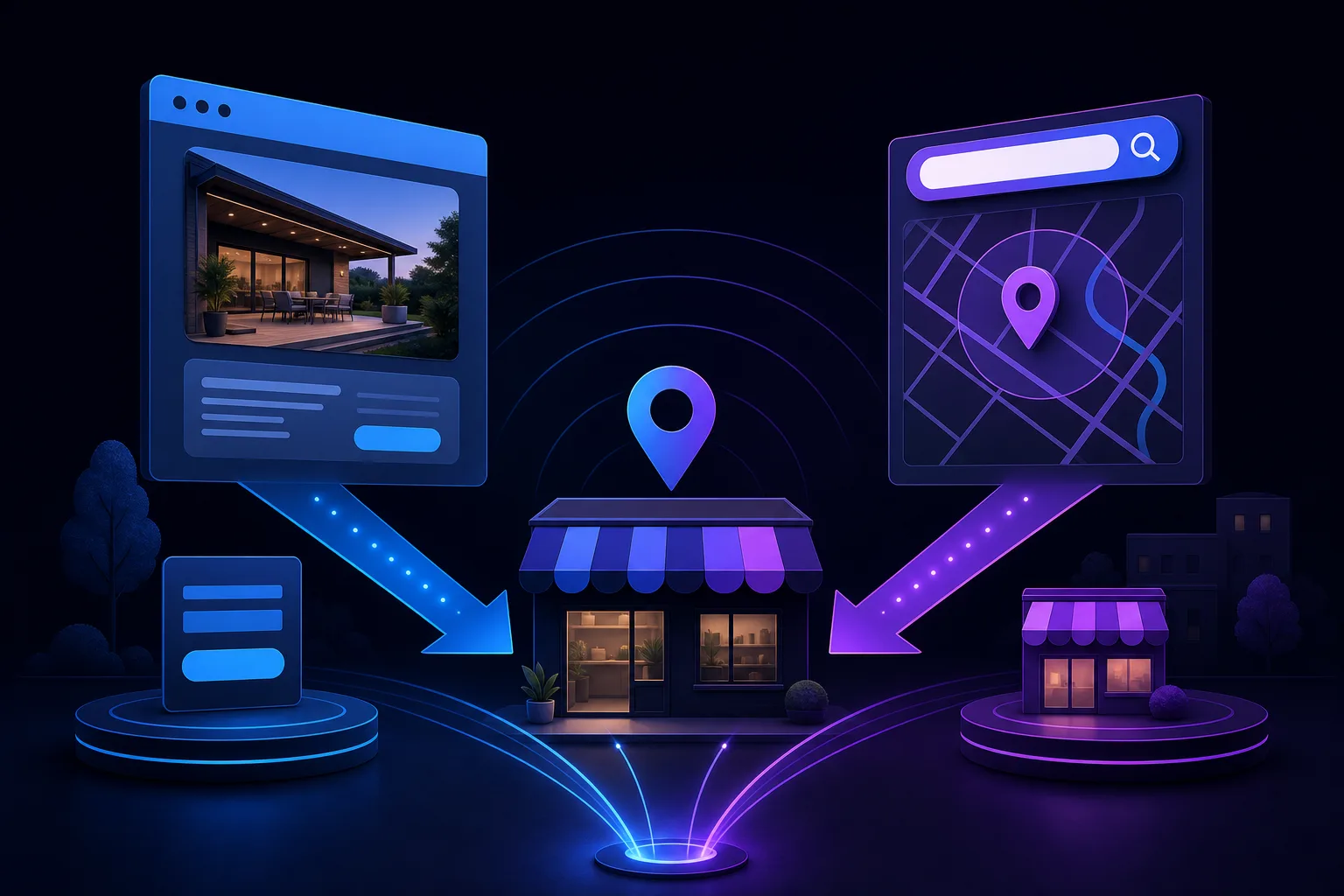
TL;DR: For most local businesses running Google Ads, a dedicated landing page beats the homepage because it matches the ad's promise, cuts distractions, and makes tracking conversions easier. The homepage still works for brand campaigns, single-service businesses with a tight site, or when you genuinely don't have the budget to build and maintain extra pages. If you're not sure which camp you're in, that's the real problem to fix first.
At a glance
| Factor | Landing Page | Homepage |
|---|---|---|
| Message match to ad | Tight, built for the click | Loose, built for everyone |
| Conversion rate potential | Higher, usually | Lower, more distractions |
| Setup effort | Requires design/copy work | Already exists |
| Best for | Specific service or offer ads | Brand name or single-service sites |
| Tracking clarity | Easy to isolate in GA4 | Muddier, mixed with organic traffic |
| Ongoing maintenance | Needs its own updates | Rides along with site updates |
| Risk if done wrong | Orphaned page nobody finds later | Wastes clicks on navigation, not conversion |
Why this question even matters
Here's the thing nobody tells you when you set up your first campaign: Google Ads doesn't care where the traffic lands. It just wants clicks that convert into whatever counts as a conversion in your account. But where that click lands decides whether it becomes a phone call or a bounce.
A plumber running "emergency drain cleaning" ads and sending clicks to a homepage that talks about the company's 30 years in business, five service categories, and a rotating photo carousel is paying for attention and then hiding the thing the person actually searched for. That's the core issue. Ads create intent. Pages either satisfy it fast or lose it.
If you've ever wondered why your local SEO isn't producing qualified leads, the landing page question is a cousin of that problem. Same disease, different symptom: traffic that doesn't match the destination.
The case for a dedicated landing page
A landing page is built for one job: converting the specific person who clicked that specific ad. No navigation menu tempting them to wander. No "About Us" story nobody asked for. Just the offer, the proof, and the next step.
Say a law office runs ads for "car accident lawyer West Palm Beach." A landing page for that campaign should open with exactly that phrase, show a phone number above the fold, list what happens in a free consultation, and maybe drop a testimonial from a client with a similar case. Compare that to sending the click to a general homepage where accident law is one of eight practice areas listed in a dropdown. One of these respects the click. The other one hopes the visitor does the work of finding relevance themselves. They usually won't.
Landing pages also are generally reported to make Quality Score happier. Google's algorithm is observed to reward message match between ad copy, headline, and landing page content, and a page built specifically for the ad group tends to score better than a homepage trying to be everything to everyone. Better Quality Score is widely reported to correlate with lower cost per click, though the precise mechanics of Google's ad auction mean this isn't guaranteed in every case. That's real money, not just a nice-to-have.
The tracking benefit is underrated too. When you send campaign traffic to a URL that exists only for that campaign, GA4 conversion tracking gets dramatically simpler because you're not untangling ad traffic from organic and direct visits hitting the same page. We've written about GA4 conversion tracking for local businesses before, and the short version is: the cleaner your traffic sources map to distinct pages, the less guessing you do later.
One-line takeaway: a landing page built for one ad, one offer, one action almost always outperforms a homepage trying to serve everyone at once.
Find out what your site is leaving on the table Get your free audit
The case for sending traffic to the homepage
Homepage isn't always the wrong answer. There are legitimate scenarios where it's fine, or even better.
If you're running brand campaigns, meaning someone searched your actual business name, the homepage is the natural destination. They already know who you are. Sending them to a stripped-down landing page might actually feel weirdly thin, like you're hiding your credentials.
If your business genuinely does one thing, say a window replacement company like the folks profiled in our Window Guys Florida case study, the homepage might already function like a landing page. Tight message, clear offer, one service, one call to action. Building a separate page in that case just duplicates work for marginal gain.
Budget and bandwidth matter too. A dedicated landing page needs copy, design, and someone to keep it updated when pricing or services change. If you're a solo operator without a marketing team, and your homepage is already reasonably focused, sending traffic there beats letting a half-finished, outdated landing page rot for six months. A current homepage beats a stale landing page every time.
There's also the SEO angle to consider. Pages built purely for ad traffic and never linked internally can become orphaned, invisible to Google's organic crawlers and useless outside the campaign. If you want that page to eventually earn organic traffic too, it needs internal links and a real place in your site structure, not a quarantine bay.
One-line takeaway: the homepage works when it's already tight, the search is brand-driven, or you can't realistically maintain a second page.
What actually happens when you get it wrong
Let's talk about the failure modes, because they're specific and avoidable.
Sending a "24-hour AC repair" ad to a homepage that leads with a company history section wastes the click's urgency. Someone with a broken AC in July doesn't want your origin story. They want a number to call, now.
Sending every campaign to the same generic landing page regardless of ad copy creates a mismatch that Google penalizes through Quality Score and that visitors penalize by bouncing. If your ad promises "free estimate on roof repair" and the landing page talks broadly about "home improvement services," you've broken the promise before anyone hits the contact form. That mismatch is a cousin of the bounce rate issue we cover in what is bounce rate and does it affect SEO, except with ads, every bounce is a paid bounce. That stings more.
Another common mistake: building a beautiful landing page and forgetting to connect it to actual conversion tracking. You get traffic, maybe even calls, but no data proving the campaign worked. That's a fixable problem, and honestly one of the more common gaps we find when we run a free AI readiness audit for local businesses. Landing pages are only as good as the tracking wired underneath them.
How to decide for your business
Here's a simple way to think it through without overengineering it.
Ask whether the ad promises something specific. "Same-day plumbing repair" is specific. "Best plumber in town" is vague and probably belongs on the homepage anyway, if you run that ad at all. Specific promises deserve specific pages.
Check how many services or products your homepage currently covers. One or two, tight and focused? Homepage can probably handle ad traffic. Five, ten, a dropdown menu with submenus? Build a landing page, because that homepage is doing too much for a cold click to parse in five seconds.
Look at your budget realistically. If you're spending a meaningful amount monthly on ads and you don't have a landing page strategy, that's likely leaking money regardless of how good your keywords or bidding strategy are. If you're running a tiny test budget to see if ads even make sense for your business, a homepage test costs nothing extra and tells you whether the concept works before you invest in dedicated pages.
Finally, think about what happens after the click converts or doesn't. A landing page with a form should feed directly into your CRM or at least a tracked event in GA4. A homepage conversion (calls, form fills) needs the same tracking discipline, it's just harder to isolate by campaign. Either path works, but only if someone is actually watching the numbers. If nobody's checking, it doesn't matter which page you picked.
Verdict
For the majority of local service businesses running Google Ads with any specificity, dedicated landing pages win. They convert better, track cleaner, and are generally reported to reward you with better Quality Scores, which is widely observed to lower your cost per click over time. That's not hype, that's just how message match is understood to work.
But don't build landing pages as a checkbox exercise. A landing page nobody maintains, that's disconnected from tracking, or that doesn't match the ad closely, is worse than a well-built homepage. The real answer isn't "always landing page" or "always homepage." It's "match the destination to the promise in the ad, and actually measure what happens after the click."
If you're not sure which of your current campaigns are sending traffic to the wrong place, that's exactly the kind of gap we look for. Check out our client case studies to see how this plays out for real businesses, or just get in touch and we'll take a look at what your ads are actually pointing to.
Find out what your site is leaving on the table
SmartAleck's free AI readiness audit scores your search presence and shows the exact gaps costing you customers. Two minutes, no sales call.
Frequently asked questions
Does Google Ads penalize me for sending traffic to my homepage?
Not directly, but Google's Quality Score does factor in landing page experience and ad relevance as documented components. A homepage that doesn't closely match the ad's promise can score lower, which can mean you pay more per click than you would with a tightly matched landing page, though the precise effect depends on the broader ad auction dynamics in your market.
How much does a dedicated landing page cost to build?
It varies widely depending on design complexity and whether you need custom copywriting, but the bigger cost driver is usually ongoing maintenance, not the initial build. If you can't commit to keeping it updated, a well-maintained homepage may actually serve you better.
Can I use one landing page for multiple ad campaigns?
You can, but it usually hurts performance if the campaigns promote different offers or services. Message match works best when the page speaks directly to what the specific ad promised, so one page per distinct offer is the safer default.
Should service-area businesses use landing pages differently than storefronts?
Service-area businesses often benefit from location-specific or service-specific landing pages since their ads frequently target a city or neighborhood plus a service. A generic homepage rarely conveys that local specificity as clearly as a page built around it.
Will a landing page hurt my SEO if it's not linked anywhere on my site?
It can become an orphaned page invisible to organic search, which is fine if its only job is paid traffic, but it's a missed opportunity if you'd like it to also rank organically. Adding it to your site's internal navigation or sitemap fixes this without hurting ad performance.
How do I know if my current Google Ads are sending traffic to the wrong page?
Check your GA4 landing page report against conversion rates by campaign. If a campaign has high clicks but low conversions relative to others with similar spend, mismatched landing pages are one of the first things worth investigating.
You May Also Like
View All Posts
Google Ads Match Types for Local Businesses: Which One Wins?
Choosing the wrong Google Ads match type is one of the fastest ways to burn your budget on clicks that never convert. This guide breaks down broad, phrase, and exact match so local business owners can stop guessing and start spending smarter.
Google Ads for Local Services: A Starter Playbook
Google Ads can send paying customers to your door fast, or drain your budget on clicks that never convert. This playbook shows local service businesses exactly how to set up, target, and optimize campaigns that actually work.
Local SEO vs Paid Ads: Where to Spend First
Compare local SEO and paid ads by setup, ongoing costs, speed, and qualified leads. This guide shows when each channel can help a small business.
How to Structure a Google Ads Campaign for Multi-Service Businesses
If you sell more than one service, one Google Ads campaign is quietly wasting your budget. Here's how to split campaigns by service so each one gets its own budget, keywords, and quality score.